Stone River's Complete Commercial Excavation FAQ
This page answers the questions we hear most often from general contractors, developers, engineers, and property owners who are planning commercial excavation in Texas. The answers below are written to be direct and specific. If your question is not covered here, use the contact form at the bottom of the page and we will respond within two business days.
Trusted by 20+ companies nationwide







General Excavation Questions
A commercial excavation contractor clears, cuts, and moves earth to prepare a site for construction. The scope typically includes demolishing and removing existing surface material, cutting or filling the site to the elevations required by the civil drawings, managing the soil that is moved, and preparing the subgrade for the trades that follow. On larger commercial projects, the excavation contractor also constructs detention and drainage infrastructure, installs utility trenches, and builds out pad sites for vertical construction. Stone River self-performs all of these scopes with its own equipment and crew.
Site Preparation and Grading
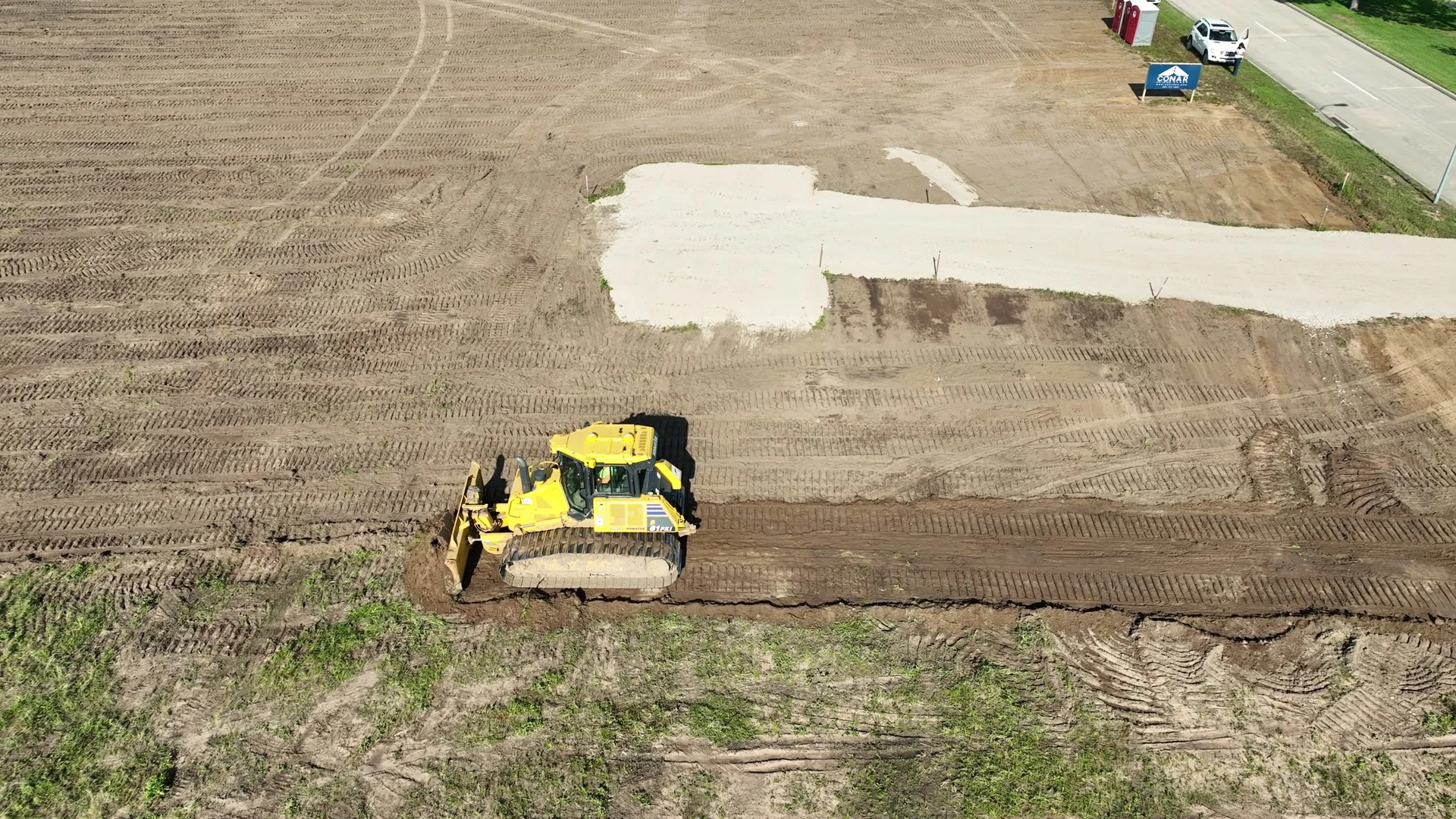
Commercial site preparation typically includes clearing and grubbing the site of vegetation and surface debris, stripping topsoil, rough grading to cut or fill the site to design elevations, and preparing the subgrade to compaction specifications required by the civil engineer. Some site prep scopes also include haul road construction, perimeter erosion control installation, and aggregate base placement. The specific scope included in Stone River's site prep contracts is itemized at bid time. We do not include items in a lump sum that the client did not ask for.
Land Clearing
Land clearing in Texas typically ranges from $1,500 to $5,000 per acre for commercial projects. The primary cost drivers are vegetation density, tree size and volume, disposal method (on-site mulching, burning where permitted, or off-site hauling), and the presence of stumps, root systems, or buried debris. Heavily wooded tracts with large-diameter trees cost significantly more to clear than scrub brush and light vegetation. Stone River provides per-acre clearing estimates after reviewing aerial imagery and, where necessary, walking the site before bidding.
Detention Ponds
A detention pond is a stormwater management facility designed to temporarily hold runoff from a developed site and release it at a controlled rate to the downstream drainage system. The goal is to prevent developed sites from increasing peak stormwater discharge rates beyond pre-development levels. Detention ponds are typically dry between rain events. They are sized and designed by a civil engineer based on the contributing drainage area, required storage volume, and the release rate allowed by the applicable drainage authority.
Utility Trenching
Trench depth for commercial utility installation depends on the utility type, pipe size, local frost depth requirements, and the minimum cover specified by the applicable utility standard. Storm drain trenches are typically three to eight feet deep depending on outlet invert elevations and site grading. Water lines are typically buried at minimum 30 to 36 inches in Texas due to low frost depth requirements. Sanitary sewer trenches vary widely based on slope requirements and tie-in elevations. Stone River reviews the utility plans and coordinates with the civil engineer before trenching to confirm depth and bedding requirements for each line.
Pad Sites
95% compaction means that the in-place density of the compacted soil has reached 95% of the maximum dry density achievable for that soil type, as determined by a Proctor test in a geotechnical laboratory. It is the most common compaction specification on commercial building pads in Texas. Achieving 95% compaction ensures that the subgrade will not consolidate or settle significantly under the loads imposed by the building or pavement above it. Compaction is verified by a third-party geotechnical testing firm using nuclear density testing or sand cone methods at locations specified by the project engineer.
Permits, Compliance and Insurance
The permits required depend on the scope, location, and site size of the project. Common requirements for commercial excavation in Texas include a TCEQ TPDES Construction General Permit for sites disturbing one or more acres, a local grading or site development permit from the municipality or county, a floodplain development permit if the site is in or adjacent to a FEMA-mapped floodplain, and HCFCD coordination for Harris County projects with detention requirements. Some municipalities also require a separate clearing permit, erosion control plan approval, or pre-construction meeting with the public works department before mobilization. Stone River reviews permit requirements with the civil engineer before bidding.
Working With Stone River
The fastest path is the bid request form at /get-quote/. It takes under two minutes and gives our estimating team the project basics needed to determine whether the scope is a fit before either side invests time in a full bid process. For projects with civil drawings available, email the plans to [email protected] along with the site address and a brief scope narrative. We review all bid requests and respond within two business days.
Still Have Questions? Talk to Stone River.
If your question is not covered above, contact us directly. We respond to all inquiries within two business days. If you have a project ready to bid, the fastest path is the bid request form.